Before signing a fit-out contract, ask five questions: which trades the contractor performs with its own people, what is excluded in writing, when the price becomes fixed and how changes are priced, whether the programme is written in weeks with every approval named, and what you receive on the last day and who answers after it. The answers tell you more than the price does. A contractor who answers all five in writing, before you sign, has usually done the work before.
1. Which trades do you build yourselves?
Most fit-outs go wrong in the handoffs: the ceiling contractor waiting for the ductwork, the joiner measuring a wall the electrician has not finished. Every subcontract is a handoff with its own programme and its own excuse. Ask which trades the contractor's own people perform, MEP, fire, joinery, finishes, and who performs the rest.
At Artline about 70% of a project's value is built by our own people. The in-house page lists the trades.
2. What is excluded, in writing?
The lowest quotation is often the one that excludes the most. Kitchen equipment, loose furniture, the electricity meter application, landlord fees, authority fees, IT equipment, signage artwork: each is reasonable to exclude, and each is a dispute if it is not written down. Ask for the exclusions as a list in the contract.
3. When is the price fixed, and how is a change priced?
A price given before design is an estimate with a signature on it. Ask at what point the number stops moving, and what happens when you change your mind. Our answer: fixed price after design, exclusions in writing, changes only by a signed change order. A change order is priced within 2 days, and nothing changes until you sign it.
The guide to reading a quotation shows where the unfixed money usually hides: provisional sums and loose quantities.
4. Is the programme written in weeks, with every approval named?
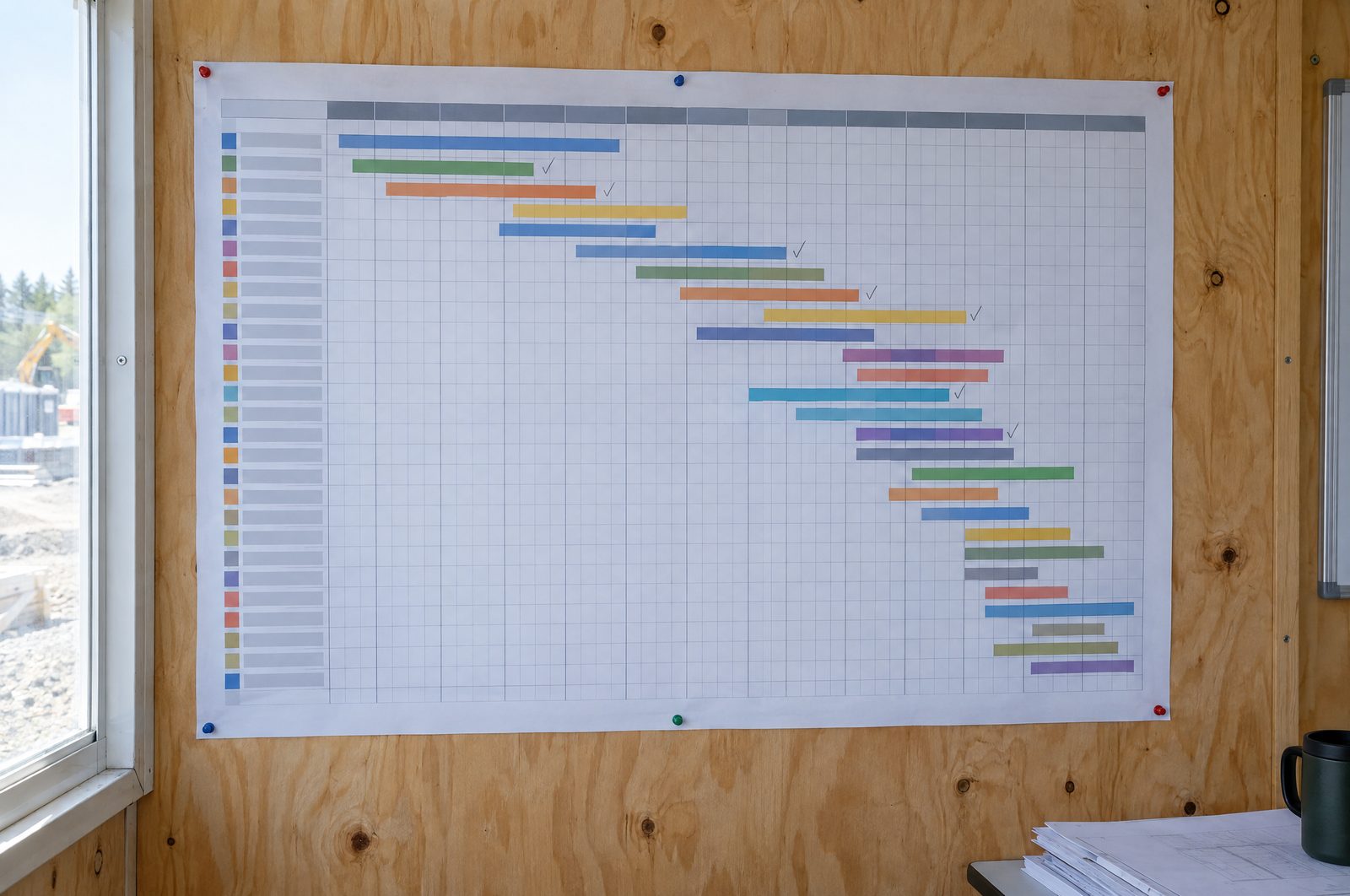
A handover date without a programme behind it is a hope. Ask for the programme in weeks: design, the landlord's approval, the permits, the build, the handover, with a name beside each approval. Then ask how you will know if it slips. Our weekly report goes out every Thursday, and how we work shows the stages.
5. What do I receive on the last day, and who answers after it?
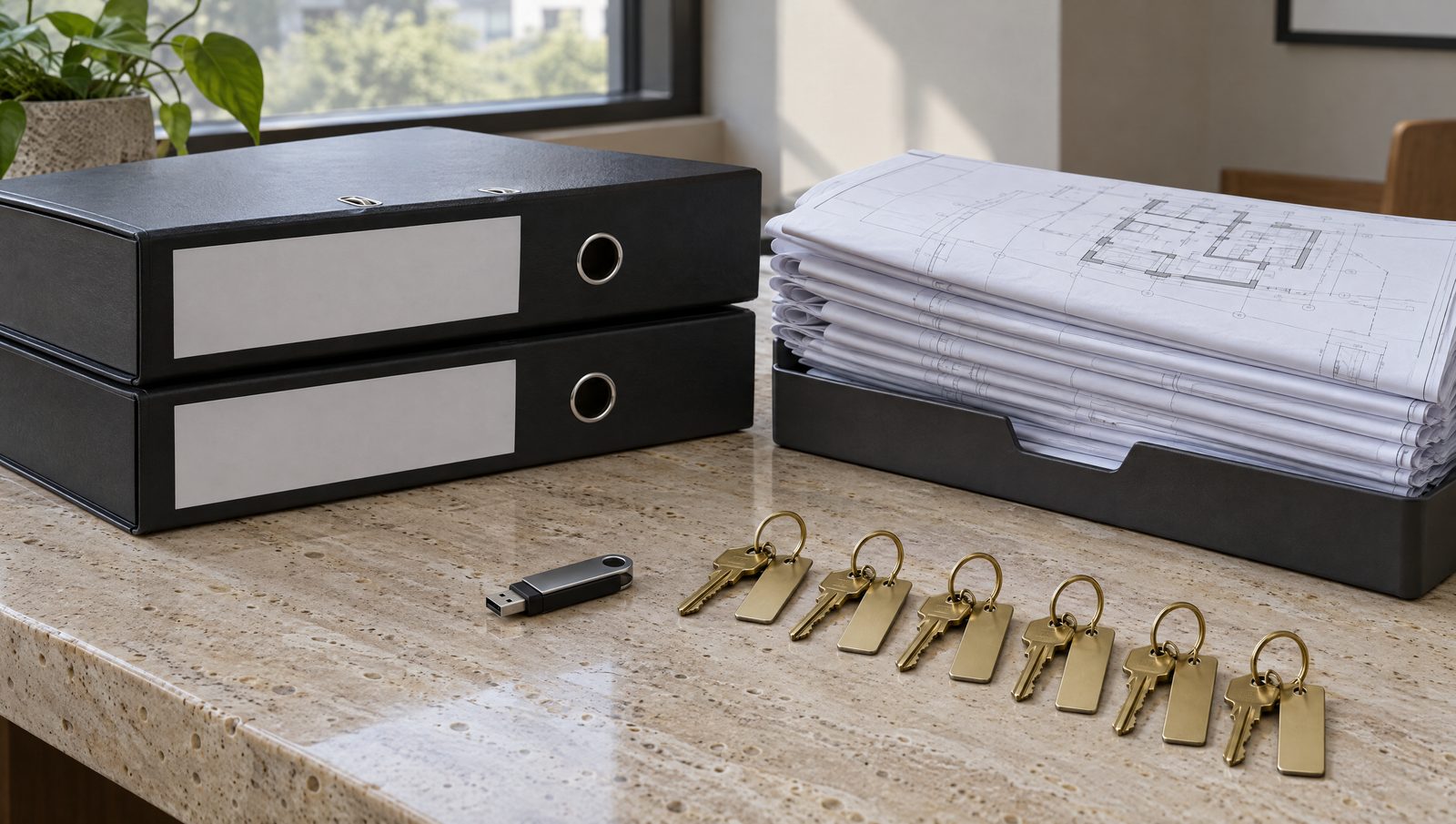
The last day is when the contractor's leverage ends and yours begins. Ask what the handover file contains, how long snags take to close, and how long the defects liability period runs. Ours: snags closed within 14 days, 12 months of defects liability, and 24 months on MEP. The handover file guide lists what you should receive.
What do weak and strong answers sound like?
| Question | A weak answer | A strong answer |
|---|---|---|
| Who builds? | We have trusted partners for everything. | These trades are ours; these two are subcontracted, to these companies. |
| Exclusions? | Everything is included. | A written list, attached to the contract. |
| Fixed price? | Here is the price, today, from the floor plan. | A range now; a fixed price after design, and changes by signed order. |
| Programme? | About three months. | A programme in weeks, with a name beside each approval. |
| After handover? | Call us if anything happens. | A handover file, a snag deadline and a defects period in months. |
Questions owners ask
Is design and build riskier than hiring a designer and a contractor separately?
It moves the risk rather than adding it. With one contract, the gap between drawing and building belongs to the contractor. The comparison sets out when each makes sense.
Should I always take the lowest quotation?
Only once the scopes match. Put the exclusions side by side first; the lowest price often buys the least.
What should the payment schedule look like?
Payments tied to measured progress or to stages you can see, an advance only against a guarantee, and a retention held until the defects are closed.