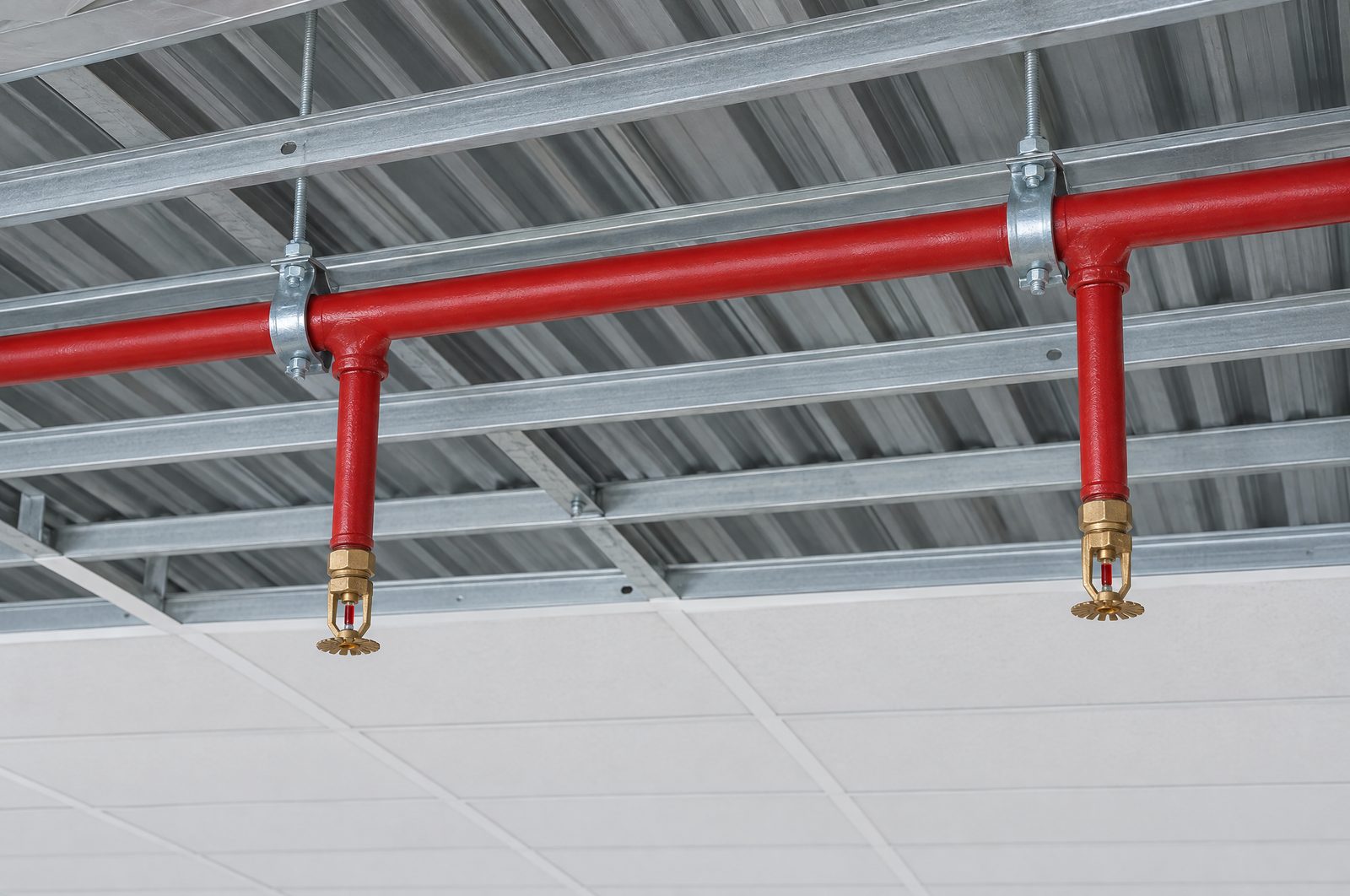
Civil defence requires every shop and restaurant in Riyadh to detect a fire, warn the people inside, light their way out and keep the exits clear: fire detection and alarm, emergency lighting and exit signs, extinguishers, sprinklers where the building has them, and exits sized for the occupancy. A restaurant adds an automatic suppression system over the cooking line and, where gas is used, gas safety. Its safety licence is issued after an inspection of the finished premises, so every system has to be installed and tested before the ceiling closes.
What does civil defence require of a shop and a restaurant?
| System | Shop | Restaurant or café |
|---|---|---|
| Fire detection and alarm | Required | Required, with heat rather than smoke detection in the kitchen |
| Emergency lighting and exit signs | Required | Required |
| Portable extinguishers | Required | Required, including a type rated for cooking oil |
| Sprinklers | Where the building is sprinklered, extended into the unit | The same, plus coverage adjusted around the kitchen |
| Suppression over the cooking line | Not applicable | Required where food is cooked under a hood |
| Gas safety | Not applicable | Where gas is used: leak detection and an automatic shut-off |
| Exits | Number and width to suit the occupancy | The same, with seating laid out to keep routes clear |
| Finishes | Materials with a fire classification for their use | The same, with particular care over the ceiling and ducts |
The detail comes from the building's classification, its size and the number of people it holds. Two shops of the same area can need different exits because one sells furniture and the other runs a queue out of the door.
Why is the kitchen the hard part?
Because it concentrates everything civil defence worries about in one room: open flame, hot oil, gas and a duct that can carry fire through the building. The hood over the cooking line carries its own suppression system, piped to nozzles over each appliance and into the duct. When it discharges, it shuts off the gas and the power to the cooking line. It is tested with the extract, not after it.
The kitchen extract guide covers the hood, the duct and the drainage that sit around it.
What changes inside a mall?
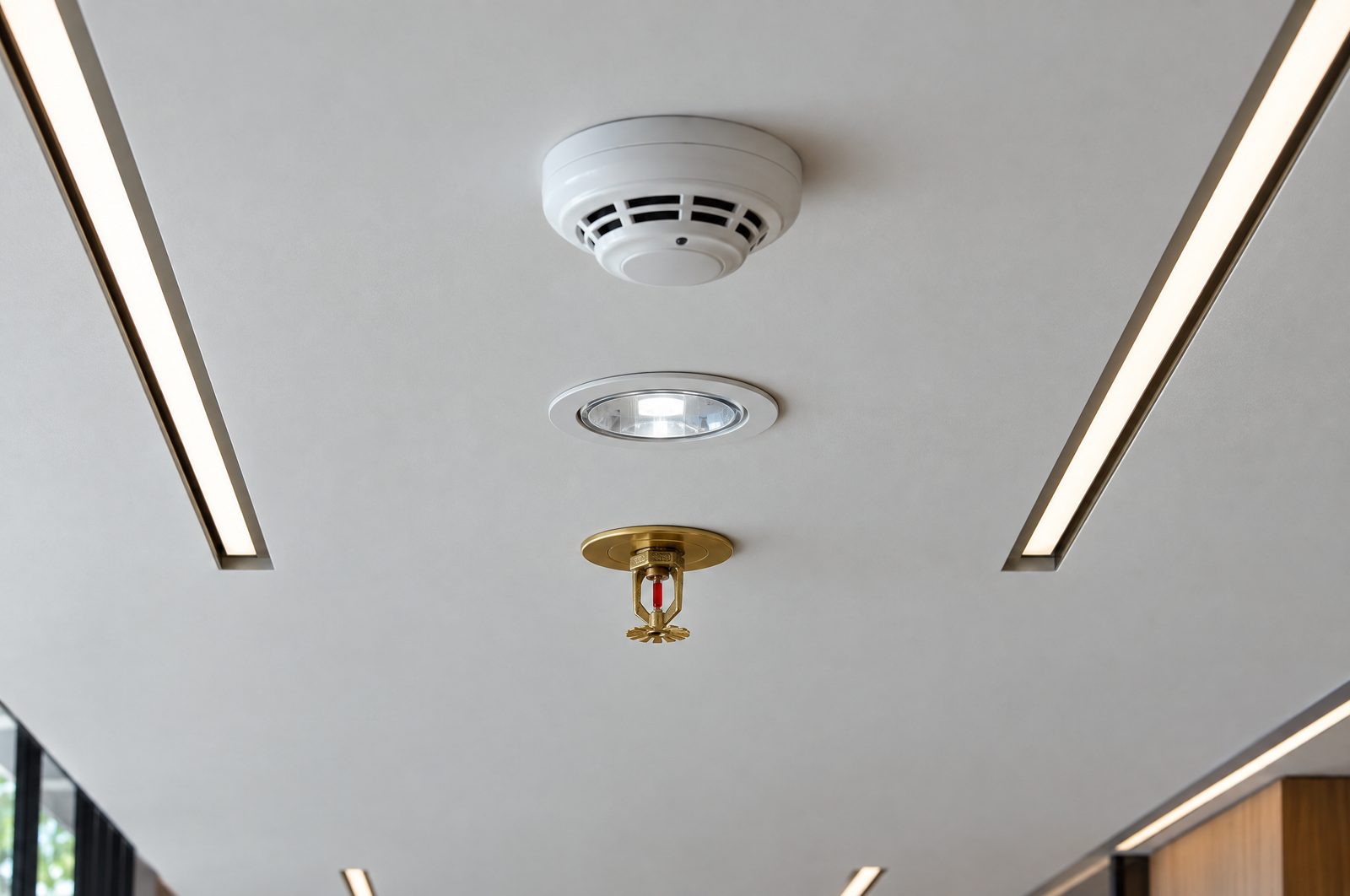
A mall unit is part of the mall's fire strategy. Its alarm reports to the mall's panel, its sprinklers come off the mall's mains, and the mall's own fire engineer reviews the design before civil defence sees it. The mall's fit-out manual will set the details: the brand of detector, the location of the tie-in, the test the mall must witness. Read it before drawing a single head.
Who installs the systems, and who signs?
Fire and life-safety systems are installed by a contractor classified by civil defence for that work, to a design that goes with the application. Ask any contractor for that classification, and ask who on their team prepares the technical report. On our projects our own fire team designs the installation, installs it and prepares the report, and the owner knows who signs, and when.
When in the programme does civil defence need to be right?
- Design. Detection, sprinklers, suppression, emergency lighting and exits are drawn with the layout, not added to it.
- Before the ceiling closes. Pipework is pressure-tested, cabling is tested, and the heads sit where the drawing says.
- Before the finishes. The alarm is commissioned, the suppression is tested with the hood, and the exits are clear of joinery.
- Inspection. Civil defence inspects the finished premises and the safety licence follows.
The inspection is the step most likely to move a date; our planning allows 1–2 weeks for it. The fewer surprises the inspector finds, the less of that is used.
Does the safety licence need renewing?
Yes. The licence has a validity period and is renewed, and the systems have to be maintained in working order in between, usually under a maintenance contract with a classified company. The handover file should carry the test certificates and the drawings the maintenance company will need.
Questions owners ask
Does every shop need sprinklers?
Not every shop. If the building is sprinklered, the system extends into the unit. Whether a standalone unit needs its own depends on its size, use and classification; the design settles it before the price is fixed.
Is a café without cooking required to have kitchen suppression?
No. Suppression is required over cooking that produces grease-laden vapour under a hood. A café that only heats and serves needs the standard systems.
Can we open part of the premises first?
Yes, when the safety requirements are complete for the part that opens and civil defence has approved it. The exits and alarm must work for that part on its own.
What is the most common reason for a failed inspection?
Exits: a route narrowed by joinery, a door that swings the wrong way, a sign that cannot be seen. They are the cheapest things to get right at the drawing stage.